 Save
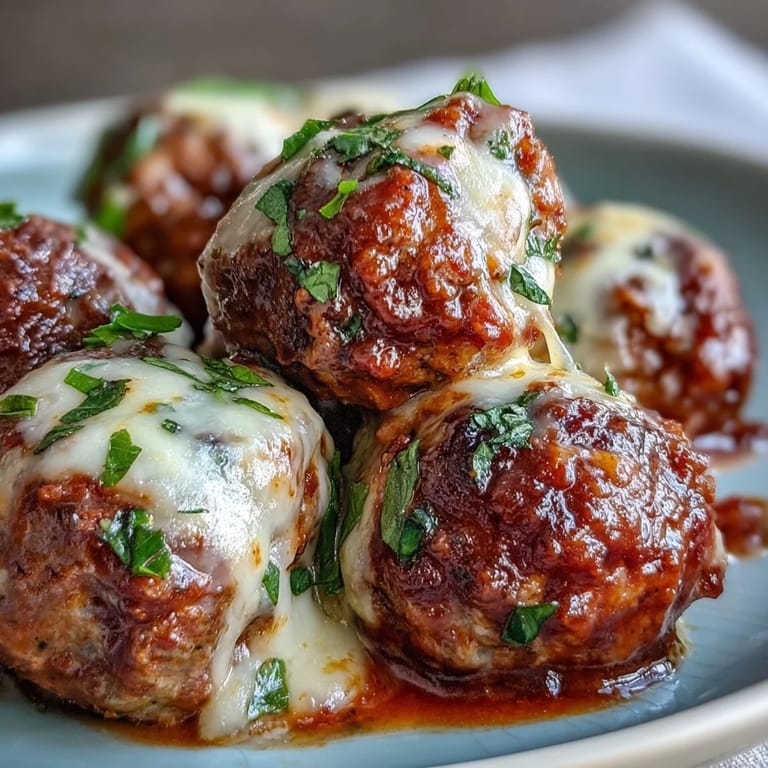
Save My neighbor Marco showed up one Sunday with a container of his nonna's meatballs, and honestly, they ruined me for the frozen kind forever. The way they sat in that deep red sauce, glistening and tender, made me realize I'd been missing something essential in my weeknight cooking. That afternoon, I started experimenting with ratios of beef and pork, the right amount of garlic to make it sing without overwhelming, and how much cheese could hide inside without making them fall apart. What started as reverse-engineering his gift became my own version, one that tastes like comfort tastes when someone who loves you made it.
I made these for the first time when my sister was going through a rough patch, and she came over to help me shape them. We stood at the counter talking, forming balls of meat between our palms, and somehow by the time they were simmering she felt lighter. The meal wasn't fancy, but it was ours, and she asked for the recipe before she left. That's when I knew this wasn't just food.
Ingredients
- Ground beef and pork: The combination gives you richness from the pork and structure from the beef; if you use all one type, they'll either be too dense or too soft.
- Fresh breadcrumbs: They act as a binder and keep the meatballs tender, but don't use panko because it stays too coarse and makes them gritty.
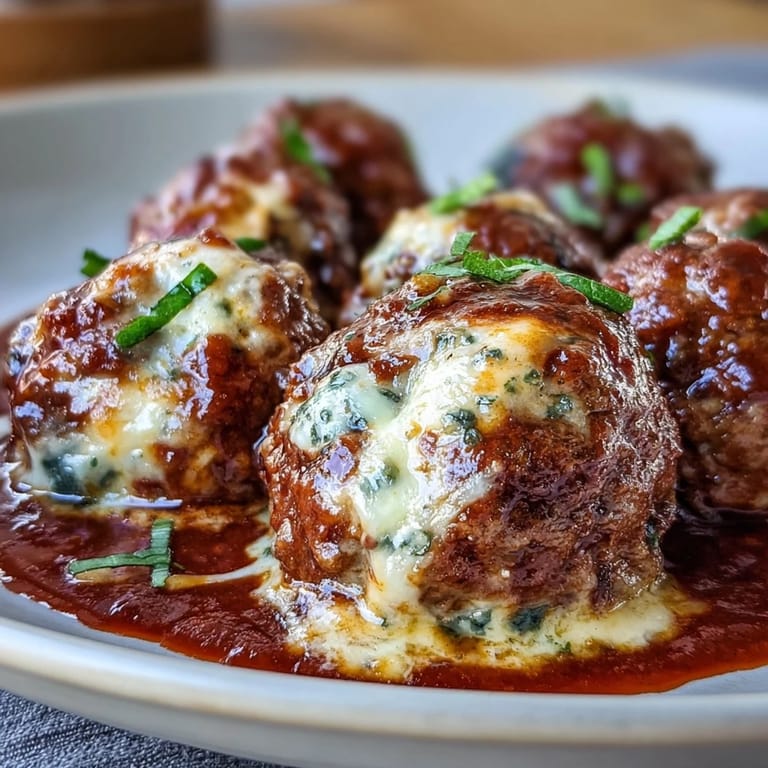
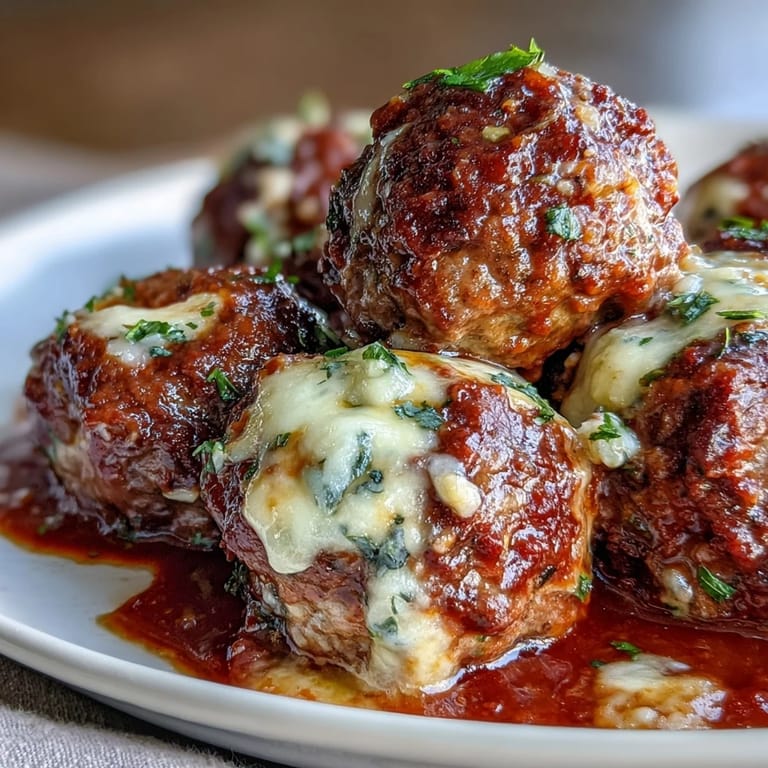
- Parmesan and mozzarella: The Parm melts and seasons throughout, while the mozzarella creates pockets of richness that catch in your teeth in the best way.
- Eggs: These hold everything together without making them heavy; one egg fewer and they'll fall apart in the sauce.
- Garlic and onion: Both get minced fine so they distribute evenly and cook into the meat rather than staying visible and chunky.
- Milk: This seems odd but it keeps the texture impossibly tender; it hydrates the breadcrumbs so they don't dry out the mixture.
- Marinara sauce ingredients: The sugar balances acidity from the tomatoes, and the red pepper flakes add a whisper of heat that makes people ask what your secret ingredient is.
Tired of Takeout? 🥡
Get 10 meals you can make faster than delivery arrives. Seriously.
One email. No spam. Unsubscribe anytime.
Instructions
- Combine your mix:
- In a large bowl, toss together beef, pork, breadcrumbs, both cheeses, eggs, garlic, onion, parsley, oregano, salt, pepper, and milk. Use your hands and mix gently until just combined—this is crucial because overworking makes them tough and bouncy instead of tender.
- Form the meatballs:
- Roll the mixture into golf ball-sized portions, aiming for about 24 total. They don't need to be perfectly round; rustic looks better anyway and they cook more evenly.
- Get them golden:
- Heat olive oil in a large skillet over medium heat and brown the meatballs in batches, about 2–3 minutes per side until they're caramel-colored on the outside. Don't crowd the pan or they'll steam instead of sear, and you'll lose that savory crust.
- Build your sauce:
- In the same skillet, add a bit more olive oil and sauté minced garlic for just a minute until it smells incredible but isn't burnt. Pour in crushed tomatoes, basil, oregano, red pepper flakes if using, sugar, salt, and pepper.
- Bring it together:
- Stir the sauce and let it bubble gently for a minute, then nestle the browned meatballs back in and lower the heat to a simmer. Cover and let them cook for 20–25 minutes, and resist the urge to stir constantly because they need to stay intact.
- Finish and serve:
- Once the meatballs are cooked through and the sauce has thickened slightly, taste and adjust seasonings. Garnish with fresh basil and serve over pasta, polenta, or with crusty bread.
 Save
Save Last winter my partner came home after a particularly brutal day and didn't say much, just set down his bag and followed the smell into the kitchen. We sat at the counter eating directly from the skillet with pieces of bread, and he finally talked about what was bothering him. Sometimes a meal doesn't need to be plated or pretty to matter.
The Secret to Tender Meatballs
The difference between meatballs that bounce on your plate and ones that dissolve on your tongue comes down to three things: not overworking the meat, the milk that hydrates the breadcrumbs, and giving them time in the sauce. I learned this through trial and error, making batches that ranged from hockey pucks to mushy disasters until I found the balance. Now when I make them, I think about the chemistry happening inside each ball, how the heat is gently cooking the meat while the sauce keeps everything moist. There's something meditative about that knowledge, about understanding why something works instead of just following steps.
Scaling and Storage
These meatballs are one of those recipes where doubling makes sense because they freeze so well. I shape them all, brown them all, but only simmer half in sauce the first night and freeze the rest raw on a baking sheet. Then whenever I need dinner, I can go straight from freezer to sauce without even defrosting. It's the kind of move that feels like cheating but tastes like you had a plan all along.
Wine and Table Pairings
The garlic and cheese in these meatballs need a red wine with enough body to match, so Chianti works beautifully because it has that earthy undertone and acidity that cuts through the richness. If red isn't your thing, a crisp white like Pinot Grigio is surprisingly good because it cleanses your palate between bites. I also serve these over creamy polenta sometimes instead of pasta, and that combination of soft on soft with the sauce binding everything together is pure comfort.
- If you're avoiding gluten, just swap in gluten-free breadcrumbs and double-check your Parmesan source since some brands add anti-caking agents with gluten traces.
- Ground turkey or chicken works if you want lighter meatballs, but reduce the cooking time by 5 minutes since they're leaner.
- Fresh basil for garnish makes a visible difference, so don't skip it even though it costs extra at the store.
 Save
Save These meatballs have become the meal I make when I want to feel capable in the kitchen and nourished at the table. They're simple enough that anyone can make them, but good enough that everyone asks for the recipe.
Recipe FAQ Section
- → Can I make these meatballs gluten-free?
Yes, simply substitute gluten-free breadcrumbs for regular breadcrumbs. All other ingredients are naturally gluten-free.
- → Can I use only one type of meat?
Absolutely. You can use all beef or all pork. The beef-pork combination provides optimal flavor and moisture, but single-meat versions work well too.
- → How do I store leftovers?
Store cooled meatballs and sauce in an airtight container for up to 4 days. Reheat gently on the stove or in the microwave. They also freeze well for up to 3 months.
- → Can I bake these instead of frying?
Yes, bake at 400°F (200°C) for 18-20 minutes on a parchment-lined baking sheet, then transfer to the sauce to finish simmering.
- → What can I serve with these meatballs?
Serve over pasta, polenta, or mashed potatoes. Crusty bread for dipping is excellent. A simple green salad balances the richness perfectly.
- → Can I make the sauce ahead of time?
The marinara sauce can be made up to 3 days ahead and stored in the refrigerator. It also freezes well for up to 3 months.