 Save
Save My friend Sarah called me in a panic two hours before her dinner party, asking if I could bring dessert. I had olive oil, cocoa powder, and a quiet afternoon ahead, so I decided to attempt something I'd only read about—a chocolate cake built on olive oil instead of butter, layered with dark ganache and crowned with homemade hazelnut praline. The kitchen filled with the smell of toasted hazelnuts and bitter chocolate as the layers came together, and when I arrived at her door with this cake, the whole room went quiet for just a moment before everyone reached for a slice.
I've made this cake three times now, and each time someone says it's the best chocolate cake they've ever had. My neighbor brought it to a potluck and it disappeared so fast she didn't even get a slice. There's something about the combination of that silky ganache and the crack of praline that just feels celebratory, even on an ordinary Tuesday.
Ingredients
- All-purpose flour: The foundation that supports all that moisture—don't skimp on measuring by weight if you have a scale.
- Unsweetened cocoa powder: This is where the deep chocolate character lives, so use the best quality you can find and sift it to avoid lumps.
- Granulated sugar: It dissolves into the batter and also provides structure, so resist the urge to reduce it.
- Baking powder and baking soda: Together they create lift without relying on butter, and the soda reacts with the cocoa to deepen the color.
- Extra-virgin olive oil: This is not the place for a timid oil—use one with character, whether fruity or peppery, because it becomes part of the flavor profile.
- Whole milk at room temperature: Cold milk can seize the batter, so pull it from the fridge 30 minutes early.
- Eggs at room temperature: They emulsify more readily with the oil and create a more tender crumb.
- Vanilla extract: A small but essential accent that keeps the chocolate from feeling one-dimensional.
- Hot brewed coffee: This sounds mysterious but it's pure magic—the heat activates the cocoa and coffee amplifies chocolate without tasting like coffee.
- Bittersweet chocolate for ganache: Chop it finely so it melts evenly and becomes silky rather than grainy.
- Heavy cream: The ratio to chocolate matters enormously, so don't eyeball this one.
- Unsalted butter: Added to ganache for extra shine and smoothness after the cream does the heavy lifting.
- Toasted hazelnuts: Toast them yourself if possible and rub the skins off while warm—it only takes a minute and changes the praline's refinement completely.
- Granulated sugar for praline: Watch it like a hawk as it caramelizes because the difference between amber and burnt is about 30 seconds.
Tired of Takeout? 🥡
Get 10 meals you can make faster than delivery arrives. Seriously.
One email. No spam. Unsubscribe anytime.
Instructions
- Set the stage:
- Preheat your oven to 350°F and get your pans ready with parchment—this keeps you from scrambling later and ensures even baking. Bring your milk and eggs out of the fridge now so they're truly room temperature by the time you need them.
- Build the dry mixture:
- Whisk flour, cocoa powder, sugar, baking powder, baking soda, and salt in a large bowl until everything is evenly distributed and you don't see any cocoa clumps. This whisking is where a lot of the mixing happens, so take your time.
- Combine wet ingredients:
- In another bowl, whisk olive oil, room-temperature milk, eggs, and vanilla until it looks smooth and cohesive, almost like a light custard. The oil should be evenly dispersed, not sitting in a pool at the top.
- Bring it together:
- Pour the wet mixture into the dry ingredients and mix gently until just combined—the batter will look a bit lumpy and that's exactly right. Overmixing toughens the crumb, so stop as soon as you don't see streaks of flour.
- Add the coffee surprise:
- Slowly pour in the hot coffee while whisking steadily until the batter is smooth and thin, almost like heavy cream. This seems counterintuitive but the heat and liquid create steam that helps the cake rise.
- Fill and bake:
- Divide batter evenly between your prepared pans and slide them into the oven for 35 to 40 minutes, checking at the edge of that window with a toothpick. It should come out mostly clean with just a few moist crumbs clinging to it.
- Cool with patience:
- Let the cakes rest in their pans for 10 minutes so they set enough to handle, then turn them out onto wire racks to cool completely. Trying to frost a warm cake is a recipe for heartbreak.
- Make the ganache:
- Place finely chopped chocolate in a heatproof bowl and heat cream in a small saucepan until it just begins to steam and shimmer at the edges. Pour the hot cream over chocolate, wait 2 minutes for the residual heat to do its work, then add butter and stir until glossy and smooth.
- Create the praline:
- Line a baking sheet with parchment and heat sugar in a small saucepan over medium heat, swirling gently until it turns golden amber—watch closely because this happens fast. Immediately stir in toasted hazelnuts and a pinch of salt, then spread onto the prepared sheet to cool and harden completely.
- Assemble with care:
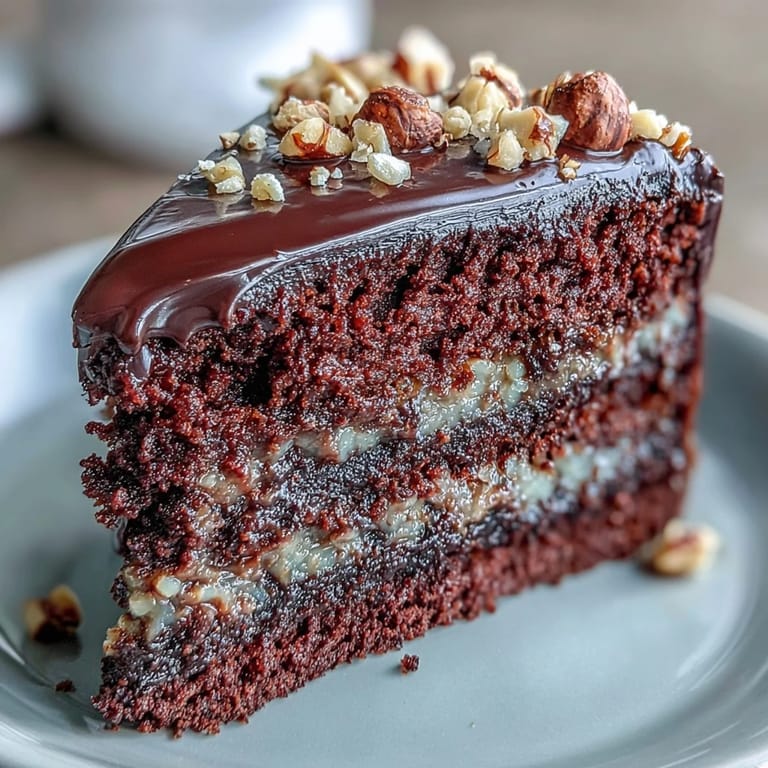
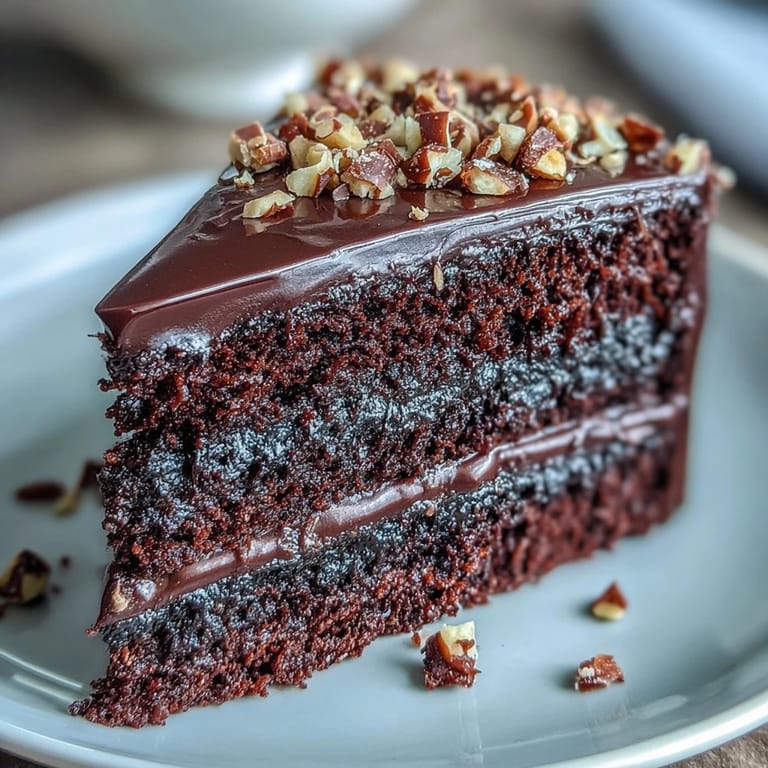
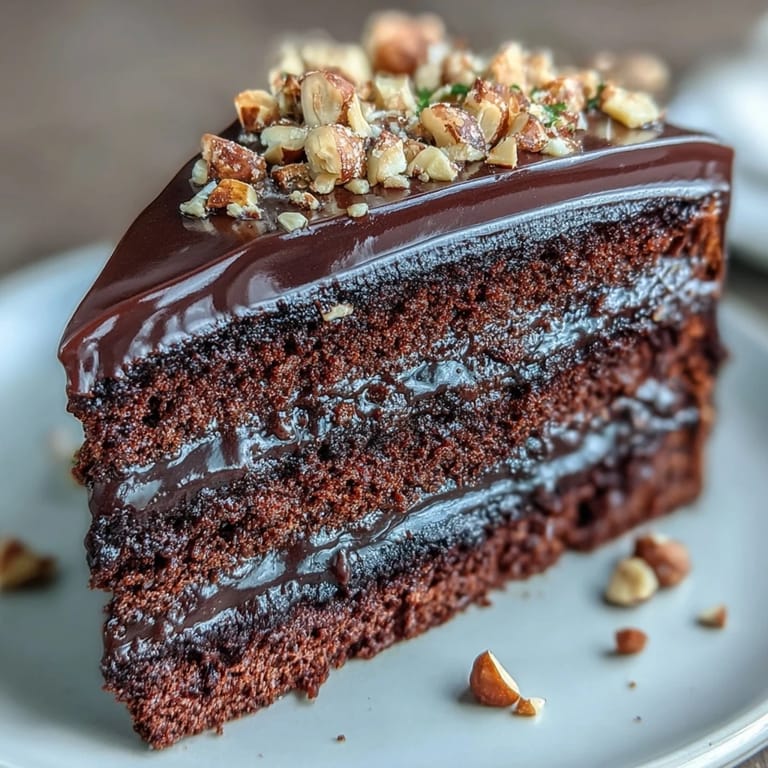
- Place the first cake layer on your serving plate, spread a third of the ganache evenly across the top, then crown it with the second layer. Cover the top and sides with the remaining ganache, then break or chop the cooled praline into shards and scatter them generously across the surface for drama and texture.
 Save
Save There's a moment when you frost the first layer and see how the ganache catches the light—glossy, dark, almost liquid silk—and you know this is going to be beautiful. That's when it stops being just a cake and becomes something you're proud to share.
Why Olive Oil Changes Everything
I used to think olive oil belonged only in savory cooking until I understood that it delivers fat and moisture differently than butter does. Butter creates a crumb through its solid structure, but olive oil creates moisture that persists—the cake stays tender for days instead of drying out by the next morning. The flavor is also softer and more complex, letting the chocolate and coffee take center stage instead of competing with a rich butter taste.
Chocolate and Coffee as a Secret Team
Coffee doesn't announce itself in this cake, but it does something subtle and powerful—it rounds out the chocolate and deepens its complexity. The heat of the coffee also helps activate the cocoa powder's flavor compounds, something that wouldn't happen with cold liquid. If you're ever nervous about a coffee flavor emerging, remember that it's mostly working behind the scenes while chocolate takes the bow.
Making This Moment Special
This cake earned its celebration status because it delivers on both beauty and taste, which is rarer than you'd think. It's the kind of dessert that makes people linger at the table instead of rushing through the meal, and that feels like its own kind of magic.
- Serve it with a dollop of barely sweetened whipped cream or a handful of fresh raspberries to add brightness against all that richness.
- A glass of tawny port or strong espresso alongside each slice turns dessert into an experience rather than just a sweet bite.
- If you're making this gluten-free, a 1:1 gluten-free flour blend swaps in seamlessly without any noticeable difference in texture or flavor.
 Save
Save This cake is proof that sometimes the most memorable moments happen in the kitchen, whether you're baking for a crisis dinner party or a quiet Sunday. Every slice carries the story of how you made it shine.
Recipe FAQ Section
- → Can I make this cake ahead of time?
Yes, the cake layers can be baked up to 2 days in advance, wrapped tightly, and stored at room temperature. Assemble with ganache and praline on the day of serving for best texture and presentation.
- → What can I substitute for the olive oil?
You can use any neutral oil such as vegetable, canola, or grapeseed oil. Olive oil adds a subtle fruity note, but other oils will still yield a moist, tender cake.
- → Why is coffee added to the batter?
Coffee intensifies the chocolate flavor without making the cake taste like coffee. If you prefer, substitute with hot water for a milder result.
- → How do I prevent the praline from sticking?
Ensure your baking sheet is lined with parchment paper and work quickly when spreading the hot caramel mixture. Once cooled completely, it should lift off easily and break into shards.
- → Can I use milk chocolate instead of bittersweet?
Yes, though the ganache will be sweeter and less intense. Bittersweet or dark chocolate provides a balanced richness that complements the sweet cake and praline.
- → How should I store leftovers?
Cover the cake loosely and store at room temperature for up to 2 days, or refrigerate for up to 5 days. Bring to room temperature before serving for the best flavor and texture.