 Save
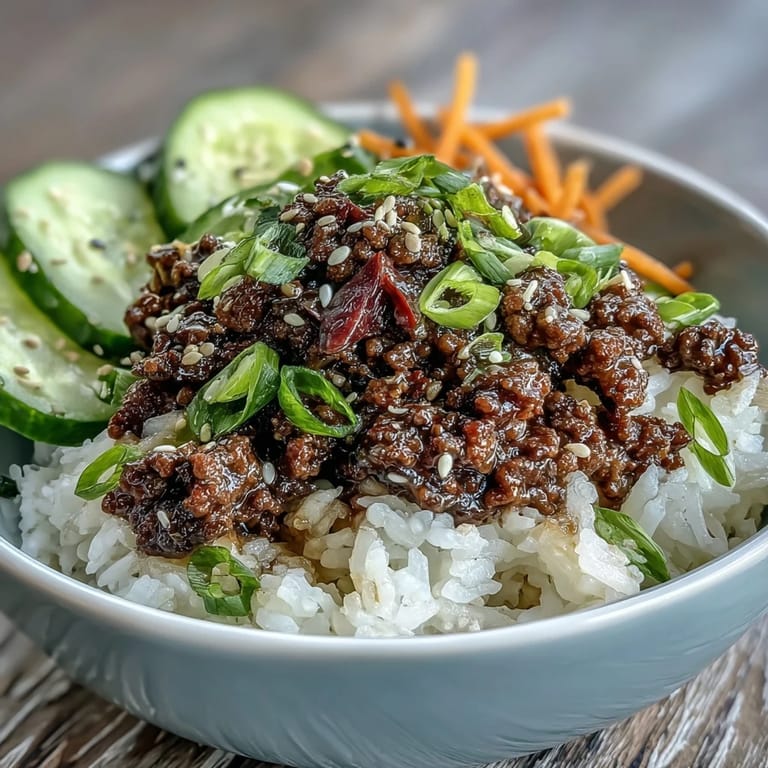
Save My neighbor handed me a jar of gochujang over the fence one Saturday morning, insisting I'd thank her later. I had no idea what to do with it until I opened my fridge that night and found ground beef thawing. What started as improvisation turned into a bowl so good I made it three times that week. The balance of sweet, savory, and that gentle kick of heat made even my pickiest eater ask for seconds.
I brought this to a potluck once, unsure if anyone would go for a DIY bowl situation. Within twenty minutes, the skillet was scraped clean and two people asked if I was starting a meal prep business. One friend admitted she'd never liked ground beef until that night. It reminded me that sometimes the simplest ingredients, when treated right, can surprise everyone at the table.
Ingredients
- Lean ground beef: The star protein here, go for 90% lean so you get flavor without a puddle of grease, and it crisps up beautifully in the skillet.
- Soy sauce: This is your salty, umami backbone, and swapping in tamari keeps it gluten free without losing any depth.
- Toasted sesame oil: A little goes a long way, this oil adds a nutty warmth that makes the whole kitchen smell incredible.
- Brown sugar: Balances the saltiness and helps create that glossy, caramelized coating on the beef.
- Freshly grated ginger: Bright and spicy, fresh ginger is worth the extra effort over the jarred stuff every single time.
- Garlic: Minced fine so it melts into the beef, adding aromatic sweetness that builds the flavor base.
- Gochujang: Korean chili paste brings a complex heat that's smoky and slightly sweet, but you can skip it or use sriracha if that's what you have.
- Green onions: Sliced thin, they add a fresh bite and a pop of color right before serving.
- Sesame seeds: Toasted seeds give a subtle crunch and a nutty finish that ties everything together.
- Jasmine rice or cauliflower rice: Your base, fluffy jasmine rice is classic, but cauliflower rice keeps it light and low carb.
- Carrot, cucumber, radish: Julienned and sliced thin, these vegetables soak up the pickling liquid and add a tangy crunch.
- Rice vinegar: Mild and slightly sweet, it's the perfect acid for quick pickles that don't overpower the dish.
- Sugar and salt: Dissolve these into the vinegar to create a brine that's balanced and bright.
Tired of Takeout? 🥡
Get 10 meals you can make faster than delivery arrives. Seriously.
One email. No spam. Unsubscribe anytime.
Instructions
- Start the pickles:
- Whisk together rice vinegar, sugar, and salt in a bowl until everything dissolves, then toss in your julienned carrot, cucumber, and radish. Let them sit for at least 15 minutes, stirring once or twice so they pickle evenly.
- Cook your rice:
- Whether you're using jasmine or cauliflower rice, get it going according to the package directions and keep it warm. Fluffy rice is the foundation that soaks up all that savory beef goodness.
- Brown the beef:
- Heat a large skillet over medium high, add the ground beef, and break it up with a spoon as it cooks. Let it brown for 5 to 7 minutes until it's cooked through and starting to get crispy bits, then drain any excess fat.
- Build the flavor:
- Stir in soy sauce, sesame oil, brown sugar, ginger, garlic, and gochujang if you're using it. Cook for another 2 to 3 minutes, stirring constantly, until the beef is glossy and the kitchen smells amazing.
- Finish the beef:
- Pull the skillet off the heat and fold in sliced green onions and sesame seeds. The residual heat will soften the onions just enough while keeping them bright and fresh.
- Assemble the bowls:
- Divide your rice among four bowls, top each with a generous scoop of seasoned beef, and pile on the pickled vegetables. Finish with extra green onions and sesame seeds, then serve right away while everything is warm and vibrant.
 Save
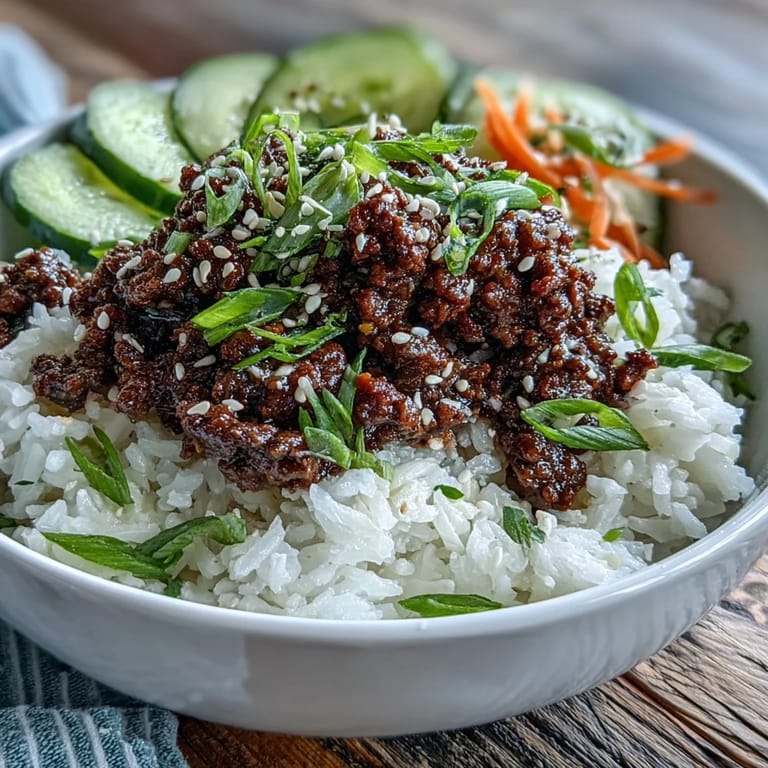
Save My kid once asked if we could have this instead of takeout, and I realized I'd accidentally created a weeknight staple. Now it's the meal I make when I want something that feels special but doesn't require me to stand over the stove for an hour. It's become our version of comfort food, the kind that fills the kitchen with warmth and leaves everyone quietly happy at the table.
Making It Your Own
I've made this with ground turkey when that's what I had on hand, and it works beautifully, just watch it closely since it cooks faster than beef. A fried egg on top turns this into an even heartier meal, the runny yolk mixing into the rice is pure magic. For a vegetarian version, crumbled tofu or tempeh soaks up the sauce just as well, press the tofu first so it crisps up nicely in the pan.
Storing and Reheating
Leftovers keep in the fridge for up to three days, store the beef, rice, and pickles separately so nothing gets soggy. Reheat the beef gently in a skillet with a splash of water to bring back the sauce, and the pickles stay crisp if you keep them in their brine. I've even packed this for lunch in a thermos, layering everything so it stays fresh until I'm ready to eat.
Serving Suggestions
This bowl is a complete meal on its own, but sometimes I'll add a side of steamed edamame or a simple cucumber salad dressed with rice vinegar. If you want to stretch it for a crowd, set up a DIY bowl bar with extra toppings like kimchi, sliced avocado, or crispy fried shallots. It's one of those dishes that invites everyone to build their own perfect bite.
- Try adding a drizzle of sriracha mayo for extra creaminess and heat.
- Pickled vegetables can be made a day ahead and kept in the fridge for even better flavor.
- Double the beef recipe and freeze half for an even faster meal next time.
 Save
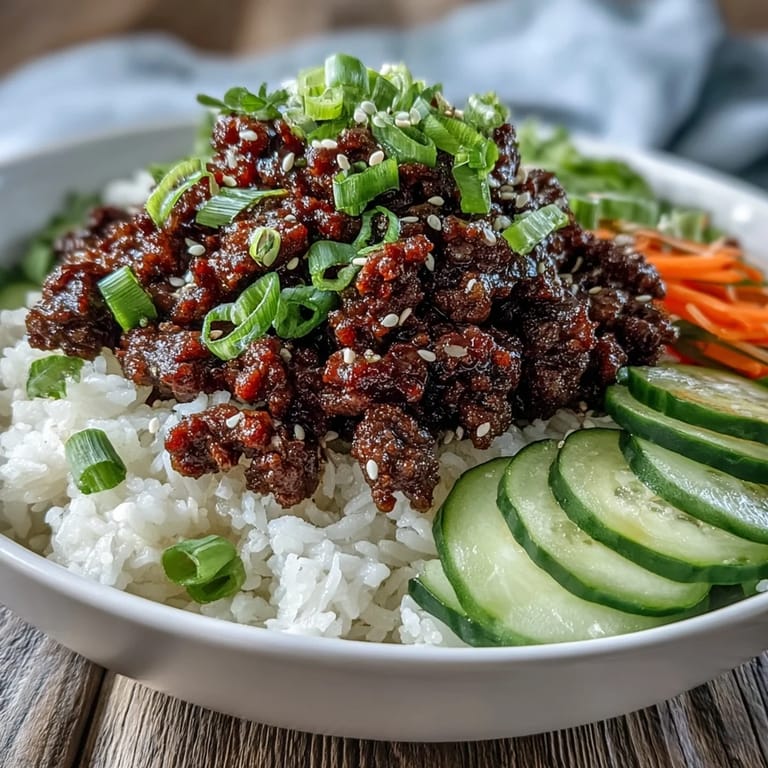
Save This bowl has earned its spot in my regular rotation, not just because it's quick, but because it feels like a little celebration every time I make it. I hope it becomes one of those recipes you turn to when you need something reliable, delicious, and just a little bit special.
Recipe FAQ Section
- → Can I make this bowl low-carb?
Yes, simply substitute cauliflower rice for the jasmine rice. This reduces carbohydrates significantly while maintaining the bowl's texture and ability to soak up the savory beef juices.
- → How spicy is this dish?
The heat level is mild to medium depending on whether you add gochujang or sriracha. Without these ingredients, the dish remains savory and sweet with no spice. Add chili paste gradually to taste.
- → Can I prepare the pickled vegetables in advance?
Absolutely. The quick pickled vegetables actually develop better flavor if made ahead—store them in the refrigerator for up to one week in an airtight container.
- → What protein alternatives work well?
Ground turkey or chicken make excellent leaner substitutes. For a vegetarian version, crumbled firm tofu or tempeh absorbs the Korean-style marinade beautifully and provides satisfying protein.
- → How long do leftovers keep?
Store components separately in airtight containers. The seasoned beef keeps for 3-4 days, pickled vegetables last up to a week, and cooked rice stays fresh 2-3 days. Reheat beef and rice gently, then assemble fresh.
- → Is there a gluten-free option?
Use tamari instead of soy sauce and verify your gochujang is certified gluten-free. Most other ingredients naturally contain no gluten, making this easy to adapt.