 Save
Save Last summer, my sister called at 9am on a Sunday, slightly breathless, asking if I could feed her and three friends in two hours. I stared at my fridge, half-empty and uninspiring, until I spotted eggplant and chickpeas. That hurried morning became my accidental lesson in the art of the brunch board, where everything looks intentional even when it's improvised.
My friend Sarah still talks about the time I forgot to buy pita and served the dips with toasted baguette slices instead. She insists it was a happy accident, the crunch somehow perfect against the silky hummus. Now I sometimes mix breads just to see if anyone notices the intentional texture variety.
Ingredients
- Chickpeas: The foundation of hummus, and I've learned that peeling the skins makes it ridiculously smooth if you have the patience
- Tahini: Don't skip this—its nutty richness is what transforms blended beans into something craveable
- Eggplant: Roasting until completely collapsed concentrates the smoky sweetness that makes baba ganoush sing
- Greek yogurt: Full-fat creates that luxurious tzatziki texture that clings beautifully to vegetables
- Cucumber: Grate and squeeze out as much liquid as possible before mixing into tzatziki, or you'll end up with watery dip
- Cherry tomatoes: Their sweetness balances salty olives and rich dips—skip them and you'll feel the absence
- Feta cheese: Its salty crumble cuts through creamy dips like a bright punctuation mark
- Mixed nuts: Almonds add crunch, pistachios bring color, walnuts offer earthiness—mix for variety
- Pita breads: Toast them lightly just before serving, room temperature bread feels sad next to vibrant dips
- Fresh herbs: Oregano and parsley aren't just garnish—they're what makes everything taste alive and present
Tired of Takeout? 🥡
Get 10 meals you can make faster than delivery arrives. Seriously.
One email. No spam. Unsubscribe anytime.
Instructions
- Make the hummus first:
- Blend those chickpeas until they surrender, adding tahini and lemon juice slowly, tasting as you go—the consistency should be lighter than you think, almost airy
- Prep the tzatziki in advance:
- Grate your cucumber, squeeze it hard in a clean towel until your hands ache, then fold it into yogurt with garlic and let it rest—this time in the fridge is non-negotiable for flavor to marry
- Roast the eggpatiently:
- Let that eggplant collapse completely in the oven until the skin chars, then scoop out the flesh and blend it into silken submission with tahini and lemon
- Arrange like you mean it:
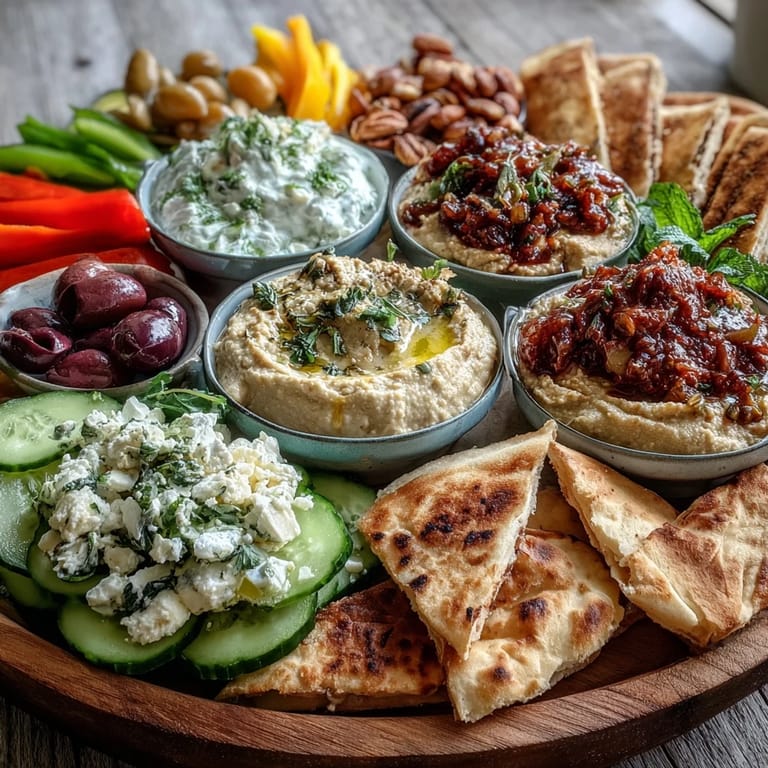
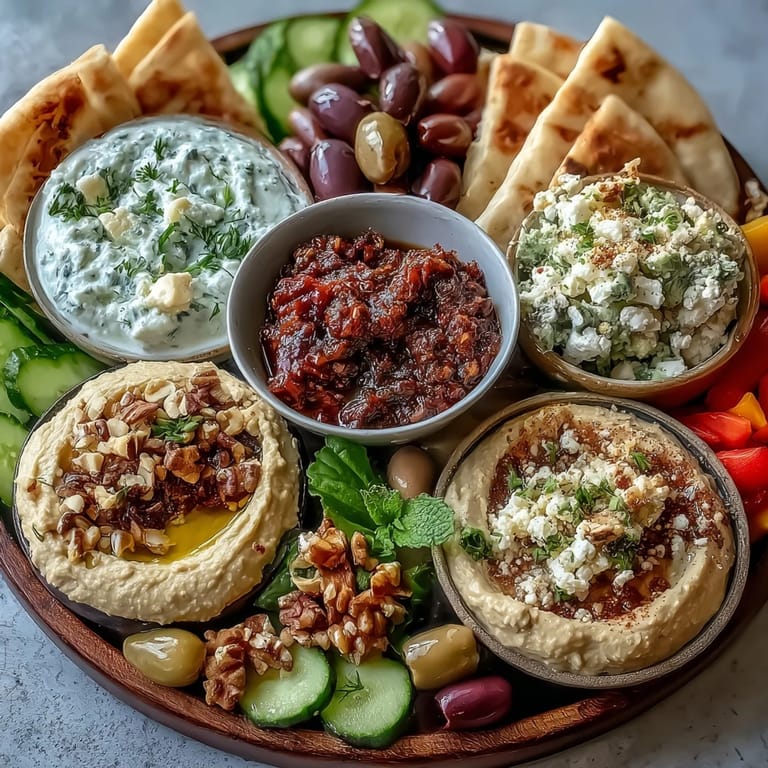
- Start with dips in small bowls across your board, then tuck vegetables in the spaces, scattering olives and feta and nuts like they landed there beautifully by accident
- Finish with confidence:
- Drizzle everything with good olive oil and shower with herbs, then step back and let people dive in with their hands—no utensils needed
 Save
Save My neighbor caught me arranging vegetables on my balcony table one Saturday and stayed for three hours, picking at olives and asking questions about eggplant roasting techniques. Some meals become conversations before they become food.
Making It Your Own
I've started adding roasted red pepper dip when I want extra color, its sweetness playing beautifully against salty feta. Sometimes I swap cucumber for radishes when I want more bite. The structure stays, the ingredients flex.
The Art of Arrangement
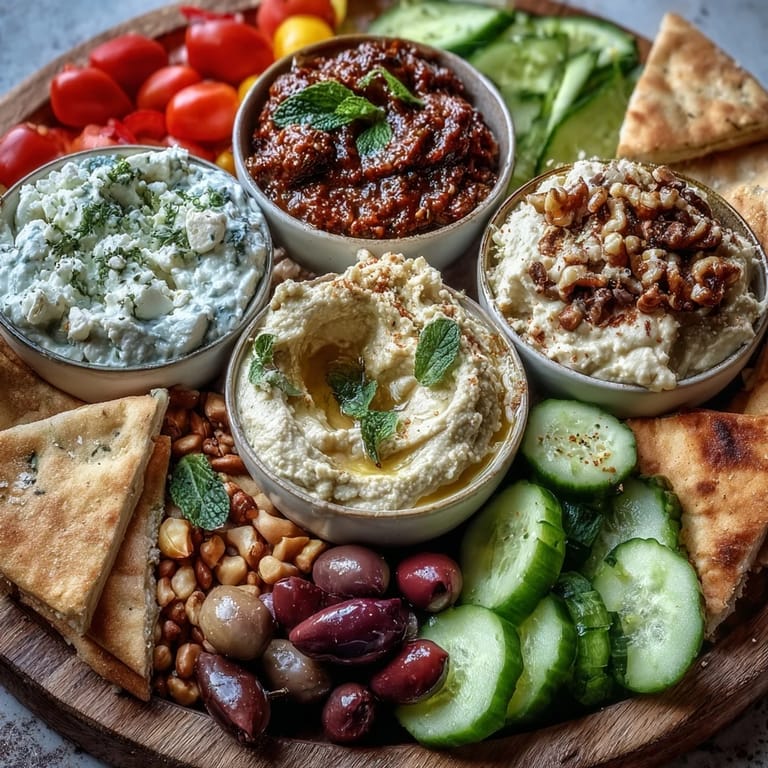
Don't overthink the plating, but do think about it. Group colors together, leave negative space, let the dips anchor the composition. Beauty matters when we eat with our eyes first.
Timing Like a Pro
The genius of this board is that almost everything can wait. Dips actually improve overnight, vegetables can be sliced hours ahead, breads toasted last minute. You're never rushing, just assembling with intention.
- Set out your serving bowls the night before so you're not hunting through cabinets
- Warm your pita in a 300°F oven for 5 minutes while you finish arranging
- Keep extra olive oil on the table for drizzling—dips dry out as they sit
 Save
Save Some days I make this just for myself, standing at the counter with one dip and whatever vegetables I have on hand. It reminds me that feeding ourselves beautifully isn't just for company.
Recipe FAQ Section
- → Can I prepare the dips ahead of time?
Yes, all the dips—hummus, tzatziki, and baba ganoush—can be prepared a day in advance. This allows the flavors to meld beautifully and significantly reduces preparation time on the day of your event. Remember to store them in airtight containers in the refrigerator.
- → What are some good additions to this Mediterranean board?
For added variety, consider including marinated artichoke hearts, sun-dried tomatoes, roasted red peppers (beyond the dip), or even grilled halloumi cheese. Fresh fruit like grapes or figs can also offer a sweet contrast to the savory elements.
- → How can I make this platter suitable for a vegan diet?
To make this board vegan, omit the feta cheese or substitute it with a plant-based alternative. Ensure that your store-bought dips are vegan-friendly, or prepare them at home using plant-based yogurt for the tzatziki. Double-check all bread labels as well.
- → What kind of drinks pair well with a Mediterranean board?
This spread pairs wonderfully with light and refreshing beverages. Crisp white wines like Sauvignon Blanc or Pinot Grigio are excellent choices. For non-alcoholic options, sparkling water with lemon and mint, or a freshly brewed iced tea, would be delightful.
- → What if I don't have a food processor for the dips?
While a food processor makes dip preparation easier, you can still achieve great results. Hummus can be mashed by hand, though it will have a coarser texture. For baba ganoush, mash the roasted eggplant flesh with a fork and then whisk in other ingredients. Tzatziki only requires mixing.
- → Can I use gluten-free options for this board?
Absolutely! The core components like dips, vegetables, olives, feta, and nuts are naturally gluten-free. Simply ensure you select gluten-free pita breads or flatbreads to accommodate guests with gluten sensitivities or celiac disease.