 Save
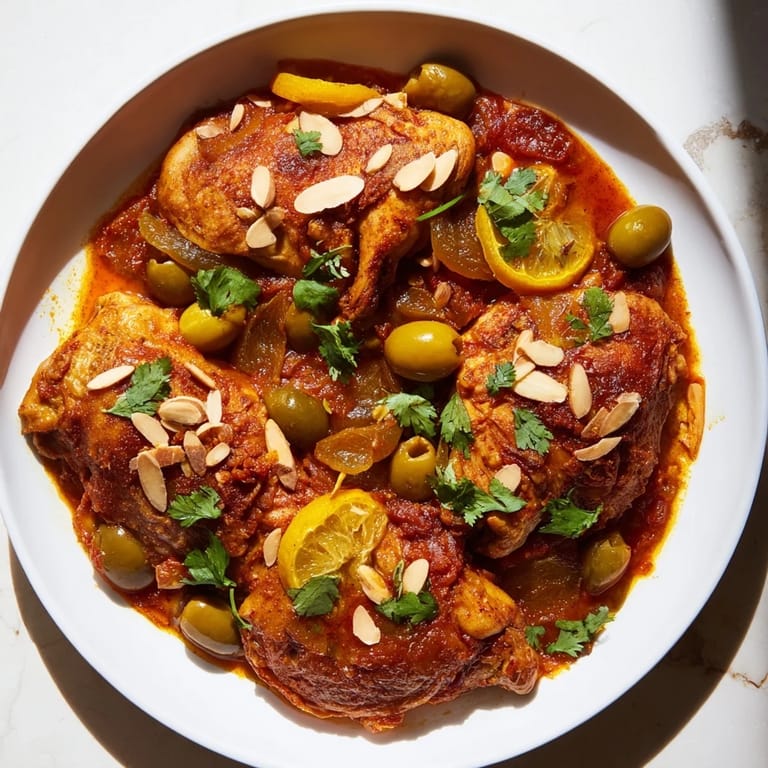
Save There's a moment in every cook's life when a single dish shifts how you think about flavor entirely. For me, it happened in a cramped kitchen in Marrakech, where an elderly woman stirred a clay tagine with the kind of unhurried confidence that comes from decades of practice. She didn't measure anything—just moved by feel, by scent, by some instinct I couldn't quite name. That tagine taught me that the secret to this North African masterpiece isn't complicated technique or rare ingredients, but rather understanding how sweet apricots, briny olives, and warm spices can sing together in perfect harmony.
I remember bringing this to a potluck on a cold autumn evening, unsure if anyone would appreciate something so different from what usually appeared on our tables. My neighbor took one bite and went completely quiet, then asked for the recipe before she'd even finished her plate. That's when I realized this wasn't just food to me anymore—it was a way of saying something about flavor, about taking time, about caring enough to layer warmth and complexity into something simple.
Ingredients
- Chicken thighs (1.5 lbs, bone-in and skin-on): Dark meat stays juicy through the long simmer and develops an incredible richness—don't swap for breasts or you'll lose half the flavor.
- Onion and garlic: The aromatic foundation that makes everything else shine, and they practically melt into the sauce by the end.
- Fresh ginger (1-inch piece, grated): This adds a gentle heat and brightness that prevents the dish from feeling too heavy.
- Carrot (1 large, sliced): Adds natural sweetness and body to the sauce without needing cream.
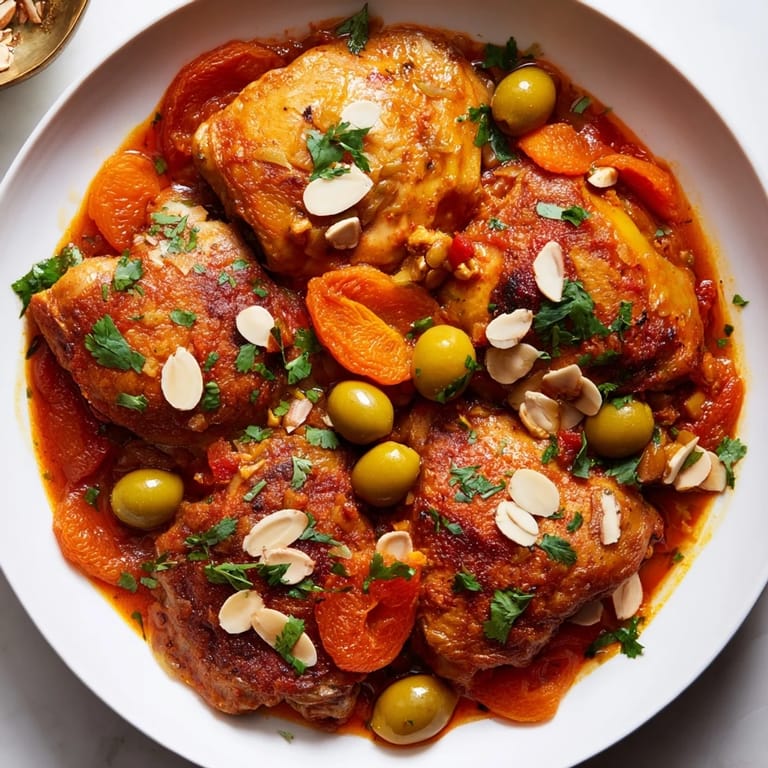
- Dried apricots (1 cup, halved): Look for unsweetened apricots with some actual flavor—the cheap ones taste like candy and throw off the balance.
- Preserved lemon (optional but worth hunting for): The rind brings an authentic tang that regular lemon juice simply cannot replicate, though the dish works beautifully without it if you can't find it.
- Spices (cumin, coriander, cinnamon, paprika, turmeric, cayenne): Toast these mentally together as a blend—they're not meant to show off individually but to create one warm, layered flavor.
- Green olives (½ cup, pitted): The brine keeps them tasting bright and cuts through the sweetness of the apricots beautifully.
- Chicken broth and diced tomatoes: Together they create the braising liquid that becomes something like magic by the end.
- Cilantro and toasted almonds (for garnish): These final touches matter more than you'd think—they add texture and a fresh herbal note that makes the whole dish feel alive.
Tired of Takeout? 🥡
Get 10 meals you can make faster than delivery arrives. Seriously.
One email. No spam. Unsubscribe anytime.
Instructions
- Dry and season your chicken:
- Pat those thighs completely dry with paper towels so they'll actually brown instead of steam. Salt and pepper generously—this is your only chance to season them directly.
- Get a golden crust:
- Heat olive oil until it shimmers, then lay the chicken skin-side down and let it be for 3-4 minutes without moving it around. You want that skin to turn golden and crispy, which happens only if you resist the urge to fuss. Flip and finish on the other side.
- Build your flavor base:
- After removing the chicken, soften the onion and carrot in the same pot with a pinch of salt, scraping up every golden bit stuck to the bottom. The fond is where the deepest flavors live.
- Bloom your spices:
- When you add the garlic, ginger, and all those warm spices, the whole kitchen will smell like North Africa. Cook this mixture for about a minute until it becomes fragrant and slightly darker—this step activates the essential oils and prevents raw spice taste.
- Add tomatoes and scrape:
- Those diced tomatoes help deglaze the pot and add subtle acidity that plays beautifully against the sweetness. Cook them briefly so they concentrate a little.
- Return chicken and simmer gently:
- Nestle the browned chicken back into the pot with the apricots, preserved lemon if using, and broth. The liquid should come about halfway up the chicken—you're braising, not boiling. Cover and let it bubble gently for 45 minutes, stirring occasionally so nothing sticks.
- Add olives and finish:
- In the last 10 minutes, add your green olives and leave the lid off so the sauce reduces and concentrates. You want it glossy and clinging to the chicken, not soupy.
- Taste and adjust:
- This is crucial—taste it before serving and trust your palate about salt and any brightness it might need.
 Save
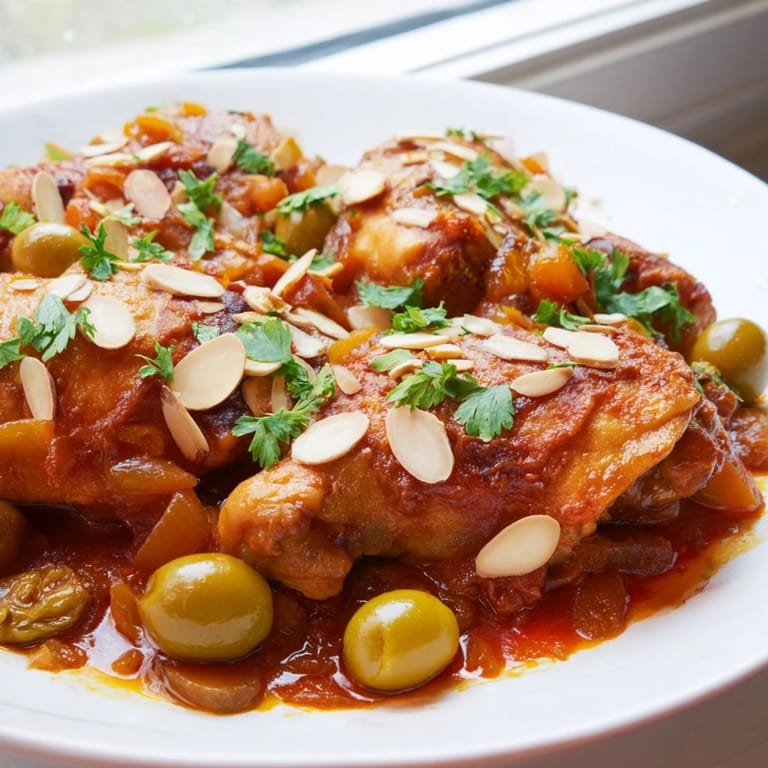
Save There's something almost meditative about the gentle bubbling of a tagine, about knowing you can walk away for 45 minutes and come back to something that smells like somewhere else entirely. This dish changed how I think about slow cooking—not as something that requires fussing and attention, but as trust, as patience rewarded.
The Magic of Preserved Lemon
Preserved lemon seems intimidating until you realize it's just lemon and salt left to cure, transforming into something almost funky and complex in the best way possible. In this tagine, the rind adds an authentic saltiness and subtle fermented tang that regular lemon juice absolutely cannot achieve. If you can't find it in your regular grocery store, most Mediterranean markets carry it, and it's worth the search. Once you have a jar, you'll start finding reasons to use it in everything—it's one of those ingredients that opens a door to a whole way of cooking.
Serving and Pairing Suggestions
This tagine was meant to be served over something that can soak up every drop of that gorgeous sauce—couscous is traditional and perfect, absorbing flavors like a dream. Fluffy white rice works beautifully too if that's what you have on hand, or warm flatbread for tearing and dipping. I've also served it over herbed quinoa when I wanted something earthier, and the combination of the tanginess of the quinoa with the sweet spiced chicken felt unexpectedly right.
Making It Your Own
This recipe is a template that begs for your own adjustments and instincts. Some people add a pinch of harissa for real heat, while others stir in pomegranate molasses for extra tartness. I've made it with dried apricots one week and fresh ones the next, and both versions have their moment. The beauty of a tagine is that it's forgiving—as long as you respect the balance of sweet, savory, and spiced, you're going to end up with something delicious.
- Harissa paste added at the end brings controlled heat without overwhelming the other flavors.
- A vegetarian version works beautifully with chickpeas and extra root vegetables like parsnips or sweet potato.
- If you can't find preserved lemon, a light squeeze of fresh lemon juice at the very end preserves some brightness, though it's a different animal entirely.
 Save
Save This tagine is the kind of dish that makes people slow down at the table and actually taste what they're eating. It's proof that you don't need complicated techniques to create something memorable—just good ingredients, patience, and a willingness to layer flavors intentionally.
Recipe FAQ Section
- → What is the key to tender chicken in this dish?
Slow simmering the chicken thighs in the spiced tomato broth allows flavors to infuse and the meat to become tender and juicy.
- → Can I substitute preserved lemon if unavailable?
Yes, preserved lemon adds a unique tang, but you can omit it or use a splash of fresh lemon juice for brightness.
- → What sides complement this dish best?
Steamed couscous, fluffy rice, or warm flatbread are traditional and perfect for soaking up the flavorful sauce.
- → How can I add heat to this dish?
Incorporate harissa or a pinch of cayenne to introduce a spicy kick without overpowering the balance.
- → Is this dish suitable for dairy-free diets?
Yes, this preparation does not include dairy, making it suitable for dairy-free preferences.