 Save
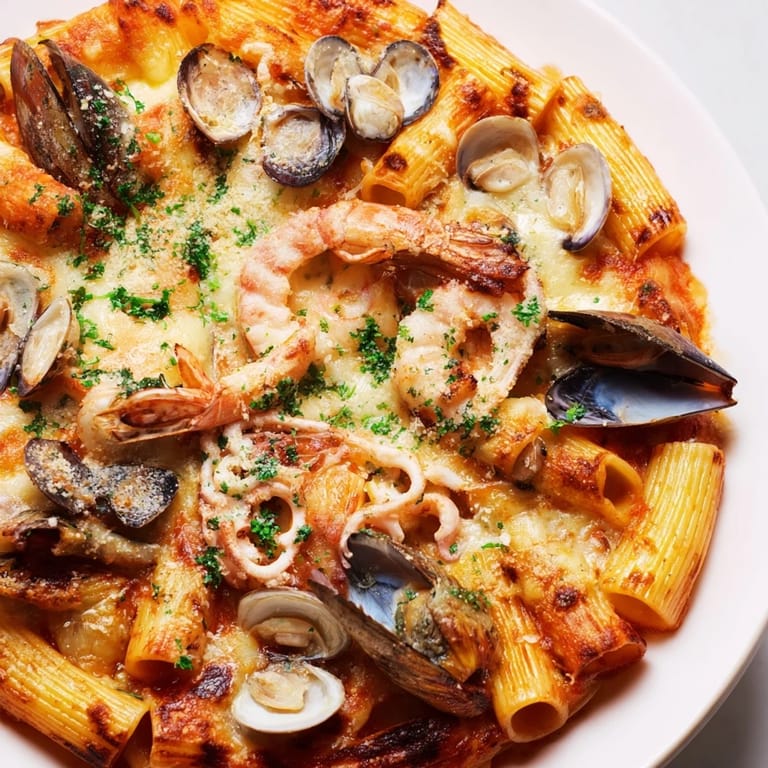
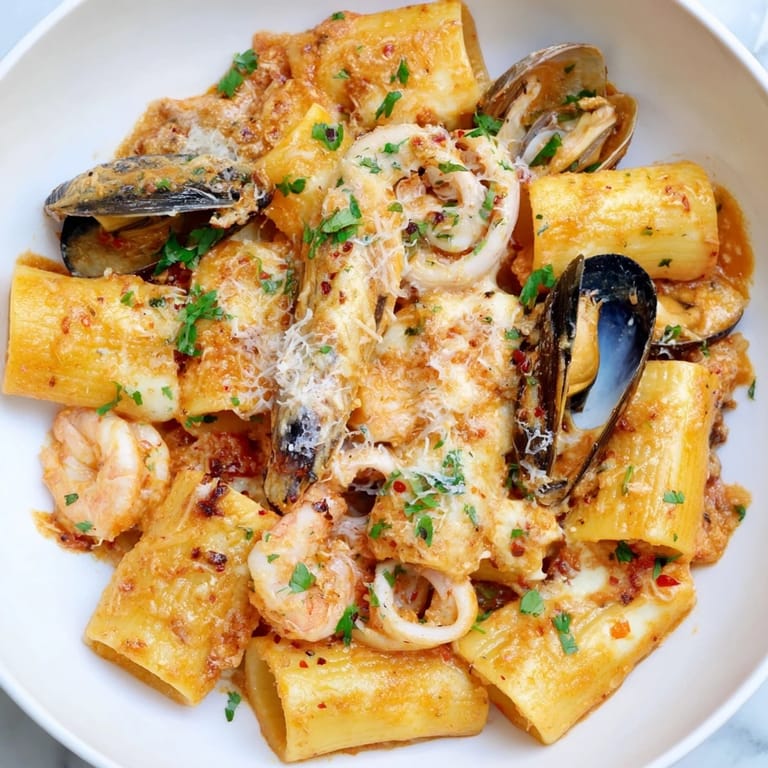
Save There's something about seafood pasta bake that turns an ordinary Tuesday into a small celebration. I discovered this dish years ago when a friend casually mentioned baking her leftover seafood pasta, and I thought she was reinventing something that didn't need reinventing—until I tasted it. The moment that golden cheese crust cracked under my spoon and released steam fragrant with garlic and tomato, I understood the magic of combining two separate loves into one dish. Now it's become my go-to when I want to feel fancy without spending hours in the kitchen, or when I need to turn a modest amount of seafood into something generous enough to serve guests.
I made this for a dinner party once when my usual confidence took a hit—I'd overcommitted to the menu and needed something that looked impressive but forgave mistakes. The bake came out bubbling and bronzed, filling my small kitchen with such an intoxicating aroma that guests started gathering before they were even asked to sit down. Watching people's faces as they took that first creamy, briny bite reminded me that the best dishes aren't the ones that demand perfection, they're the ones that make people feel cared for.
Ingredients
- Penne or rigatoni (300 g): The tube shapes catch sauce better than long pasta would, and undercooking by two minutes means they stay textured instead of turning to mush in the oven's heat.
- Mixed seafood (300 g, thawed): Shrimp, mussels, squid, and scallops create variety in every bite, but use what you love or what's freshest at your counter.
- Olive oil (2 tbsp): Good oil builds the foundation—don't skip quality here because it's one of the few things you'll actually taste in every spoonful.
- Small onion, finely chopped: The fine chop means it disappears into sweetness rather than staying as recognizable chunks.
- Garlic cloves, minced (2): Mince them yourself if you can; the difference between fresh minced and jarred is the difference between depth and flatness.
- Canned chopped tomatoes (400 g): Good canned tomatoes are often better than fresh ones trying too hard, and they break down into silky sauce.
- Heavy cream (150 ml): This is what transforms the sauce from simple tomato into something that coats your mouth in velvet—don't be shy with it.
- Tomato paste (2 tbsp): The concentrate deepens the tomato flavor without watering everything down with more liquid.
- Dried oregano (1 tsp): Oregano and seafood are old friends; it brings brightness without overpowering.
- Chili flakes (½ tsp, optional): A whisper of heat makes you notice all the other flavors instead of just tasting cream.
- Mozzarella, grated (100 g): Fresh mozzarella will separate in the oven, so use low-moisture or regular; it melts into those golden pockets you crave.
- Parmesan, grated (40 g): The sharpness cuts through richness and creates that crust that actually crisps.
- Fresh parsley, chopped (2 tbsp): Scattered on top at the end, it's your promise that this dish isn't heavy, just satisfying.
Tired of Takeout? 🥡
Get 10 meals you can make faster than delivery arrives. Seriously.
One email. No spam. Unsubscribe anytime.
Instructions
- Set your stage:
- Preheat your oven to 200°C and grease your baking dish while it warms; an oven that's ready means you're not rushing later.
- Tame the pasta:
- Cook pasta two minutes under package time so it's still slightly firm when you bite it—it'll keep cooking in the oven and come out tender, not collapsed.
- Build the base:
- Warm olive oil in a wide skillet and let the onion soften into something almost translucent; add garlic for just one minute so it doesn't turn bitter.
- Create the sauce:
- Stir in tomatoes, tomato paste, oregano, and chili flakes, then let everything simmer gently for 10 minutes so the flavors stop being separate ingredients and start being a chorus.
- Lighten and taste:
- Pour in cream and let it warm through for two minutes, then taste—this is your moment to add more salt or a pinch more heat if you want it.
- Add the seafood gently:
- Fold in your seafood carefully and cook just until you see the color change; overcooked seafood is rubbery and regretful, so watch closely.
- Marry it together:
- Toss the drained pasta with the sauce until every piece is coated, then transfer everything to your waiting baking dish.
- Crown it:
- Scatter both cheeses across the top in an even layer—it doesn't need to be perfect because the oven will melt it into one gorgeous crust.
- Let the oven work:
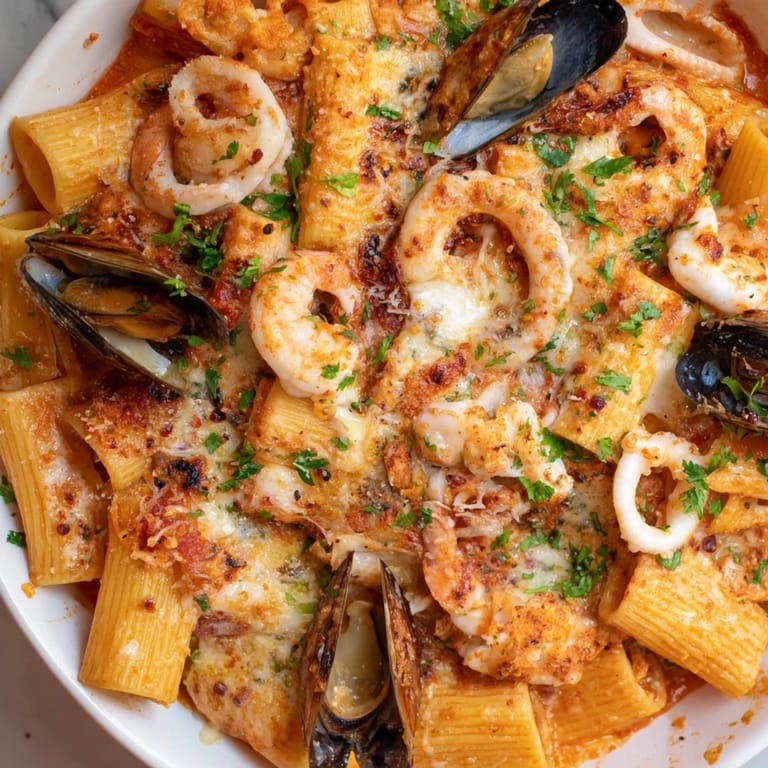
- Bake for 18 to 20 minutes until you see bubbles breaking at the edges and the cheese has turned golden with slightly deeper brown spots.
- Finish with patience:
- Let it rest for 5 minutes so the sauce sets slightly and the heat mellows, then finish with parsley scattered over top for color and a hint of freshness.
 Save
Save The first time I served this to someone I was trying to impress, I was so nervous about the seafood timing that I checked on it obsessively—three times in the oven, which probably wasn't necessary but also didn't hurt. When they asked for seconds and then asked how long it took me to make, I felt almost embarrassed to say less than an hour. It's a quiet kind of pride, making something that looks and tastes like you spent a whole afternoon when really you just understood timing and temperature.
Why Seafood Pasta Bake Feels Like More Than Dinner
This dish sits in that perfect space between casual and elegant, which is why it works for a family Thursday or impressing someone's parents. It's forgiving enough that a few minutes won't ruin it, but it's still fancy enough to feel like an occasion. I've learned that's the sweet spot for the food I come back to again and again.
The Art of Balancing Cream and Tomato
Getting that sauce right is about understanding that tomatoes are acidic and cream is luxurious, and together they need to feel balanced rather than one drowning the other. I've made this enough times now to know that if the sauce tastes too sharp, more cream fixes it; if it feels too heavy, a squeeze of lemon balances it back. The simmer time matters more than you'd think—rushing means the flavors haven't found each other yet.
The Golden Finish
The cheese topping is what makes this feel special, turning a baked pasta into something restaurant-worthy on the outside. Don't skimp on mixing both kinds because mozzarella gives creaminess and Parmesan gives that sharp, crispy edge that makes texture interesting. That five-minute rest after baking is when the magic settles and the flavors calm down into something coherent instead of shouting at each other.
- If your cheese isn't browning, your oven might run cool—move the dish higher up or give it another few minutes without worrying.
- Fresh parsley at the end isn't decoration, it's contrast; it reminds your mouth that there's brightness hiding under all that richness.
- Leftovers reheat beautifully if you cover them loosely with foil and warm them at 160°C until they're heated through.
 Save
Save This seafood pasta bake has become my answer to the question of what to make when I want to feel like I'm at a restaurant but I'm standing in my own kitchen. It's simple enough to repeat but interesting enough that I don't get bored, and it tastes like you actually care about feeding people well.
Recipe FAQ Section
- → What types of seafood work best in this dish?
A variety such as shrimp, mussels, squid, and scallops creates a balanced flavor and texture. Fresh or thawed frozen seafood both work well.
- → Can I use different pasta shapes?
Yes, penne or rigatoni is recommended as they hold sauce well, but other short pasta shapes work too.
- → How do I prevent the seafood from overcooking?
Fold seafood gently into the sauce and cook briefly until just opaque to maintain tenderness.
- → Is it possible to make a lighter version?
Substitute heavy cream with crème fraîche or light cream and consider reducing the cheese topping for fewer calories.
- → What wine pairs well with this baked seafood pasta?
A crisp white wine like Pinot Grigio complements the rich and creamy elements perfectly.