 Save
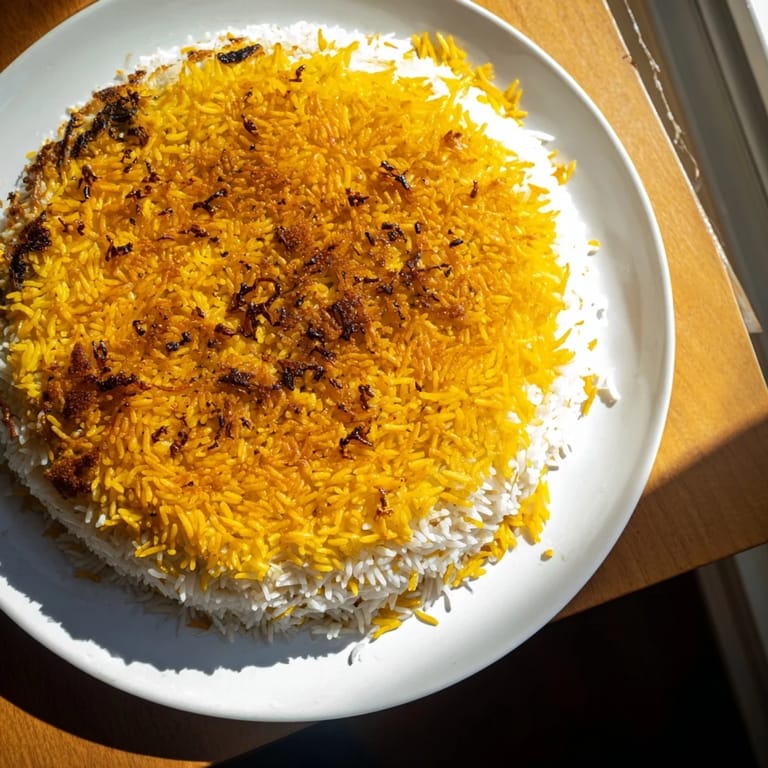
Save The first time I really understood tahdig, I wasn't even trying to make it perfectly. My grandmother's pot had been heating with that yogurt-rice mixture sizzling at the bottom, and I kept checking on it nervously, convinced something would burn. What emerged instead was this golden, crackling layer that shattered against the spoon, releasing the most incredible toasted aroma. That moment taught me that some of the best things in the kitchen happen when you stop hovering and let the heat do its work.
I made this for a group of friends who'd never had proper tahdig before, and watching their faces when I inverted that pot onto the platter was worth every minute of attention. The room got quiet for a second, then someone said it looked almost too beautiful to eat. It wasn't fancy or trendy—just honest rice transformed by patience and a few good ingredients.
Ingredients
- Basmati rice (2 cups): Use long-grain basmati for that delicate, separate texture; rinse it relentlessly until the water runs clear, which removes excess starch and prevents mushiness.
- Salt (1 tablespoon for soaking): This seasons the rice gently from the inside out during that crucial 30-minute soak.
- Saffron threads (1/4 teaspoon): The threads should be deep red and fragrant; steep them in hot water to release their color and floral warmth before using.
- Plain Greek yogurt (4 tablespoons): This creates the tahdig layer, and its acidity helps the rice brown beautifully while adding subtle tang.
- Vegetable oil (2 tablespoons plus extra): A neutral oil works best so the other flavors shine through without competition.
- Unsalted butter (2 tablespoons, melted): The butter brings richness and helps develop that caramelized crust when combined with the yogurt.
- Ground turmeric (1/2 teaspoon, optional): If you use it, the tahdig takes on a warm golden hue that looks almost jewel-like.
- Ground black pepper (1/2 teaspoon): A light hand here; just enough to whisper in the background.
Tired of Takeout? 🥡
Get 10 meals you can make faster than delivery arrives. Seriously.
One email. No spam. Unsubscribe anytime.
Instructions
- Rinse and soak your rice:
- Run the basmati under cold water, stirring gently with your fingers until the water flows clear—this takes patience, but it's the foundation of fluffy rice. Soak it in a bowl with salt and water for at least 30 minutes; this helps each grain cook evenly without sticking to its neighbors.
- Parboil until just tender:
- Bring a large pot of water to a rolling boil, add the drained rice, and cook for 5–6 minutes until the grains are tender but still have a slight firmness in the center. Drain thoroughly and set aside.
- Steep the saffron:
- Grind the threads slightly with your fingers to release their essence, then pour hot water over them and let them sit for 10 minutes until the liquid turns a deep amber. This is your liquid gold for flavor and color.
- Build your tahdig mixture:
- In a bowl, combine the yogurt, 1 tablespoon of that saffron water, turmeric if using, and 1 cup of the parboiled rice, stirring until you have a thick, spreadable paste. This mixture is what creates the crispy, caramelized crust everyone remembers.
- Heat your pan:
- Pour the oil and melted butter into your heavy-bottomed pot over medium heat, letting it shimmer and become fragrant before you proceed. The heat needs to be even so the tahdig browns uniformly rather than burning in one spot.
- Spread the tahdig base:
- Spoon the yogurt-rice mixture evenly across the bottom of the hot pot, creating a single, even layer. You'll hear it sizzle—that's the beginning of the magic.
- Layer the remaining rice:
- Gently spoon the rest of the rice over the yogurt layer, mounding it slightly toward the center for even cooking. Drizzle the remaining saffron water over the top, then use the wooden spoon handle to poke a few small holes into the rice to let steam escape.
- Steam under a towel-wrapped lid:
- Wrap a clean kitchen towel around the underside of your lid, then cover the pot tightly; the towel catches condensation so it doesn't drip back onto your rice. Cook over medium heat for 10 minutes until you hear gentle crackling sounds, then reduce to low and continue for 35–40 minutes.
- Rest and invert:
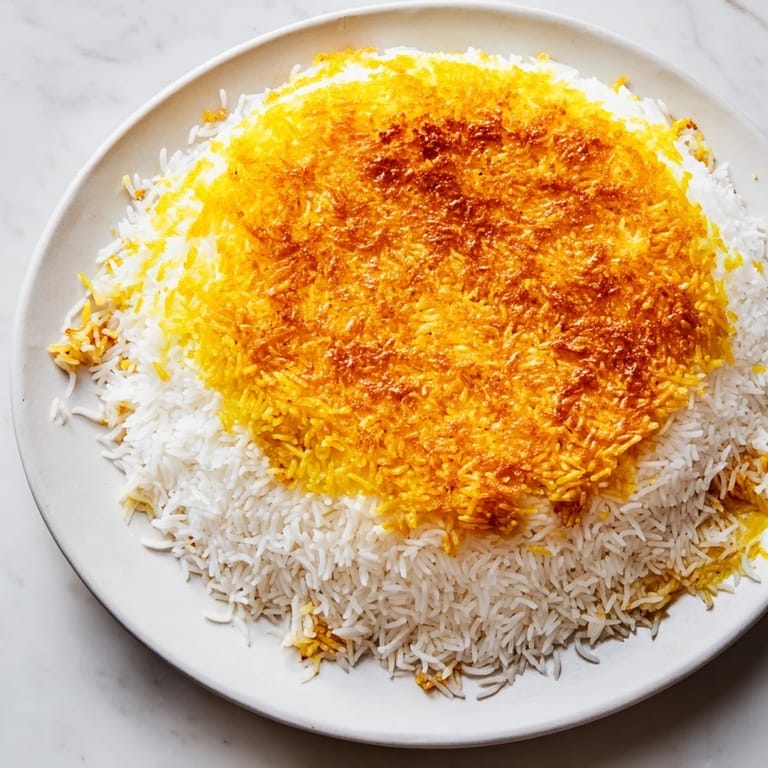
- Turn off the heat and let the rice sit undisturbed for 5 minutes so the tahdig fully sets. Place your serving platter upside down over the pot, take a breath, then carefully flip so the golden crust is now on top.
 Save
Save I once rushed the inversion and the tahdig crumbled into pieces across the platter, but even broken, it tasted incredible. My partner said it looked like shattered amber, and somehow that made it feel intentional instead of ruined. That's when I realized tahdig doesn't have to be picture-perfect to be special.
The Secret of Saffron
Saffron is expensive and easy to waste if you don't treat it right. Steep it in hot water rather than cold, and give it real time to bloom—10 minutes minimum—so you're actually getting the flavor and color you paid for. A little goes a long way, and that small amount you use here touches both the tahdig and the rice above it, connecting all the layers with a floral, warm note that makes you pause mid-bite.
Temperature Control and Timing
The shift from medium to low heat is where many people stumble, so don't skip it. The first 10 minutes on medium heat start the caramelization and let the rice hear the pan; then lowering the heat protects everything from burning while still giving you that golden crust. If your stove runs hot, start checking at 30 minutes to see if the tahdig is developing the color you want.
Variations and Serving
Once you've mastered the yogurt tahdig, try it with thin potato slices on the bottom, which brown differently and add a subtle sweetness. Serve it warm, broken into large shards, with fresh herbs like dill or cilantro scattered over the top for brightness. If you have barberries, their sharp tang cuts through the richness and looks like small jewels against the golden rice.
- Add a cinnamon stick or a few cardamom pods to the boiling water for deeper warmth in every grain.
- Wrap the pot with a thick kitchen towel before adding the lid to trap steam and heat more effectively.
- Use a heavy-bottomed pot with a tight-fitting lid; every small detail matters when you're building this kind of crust.
 Save
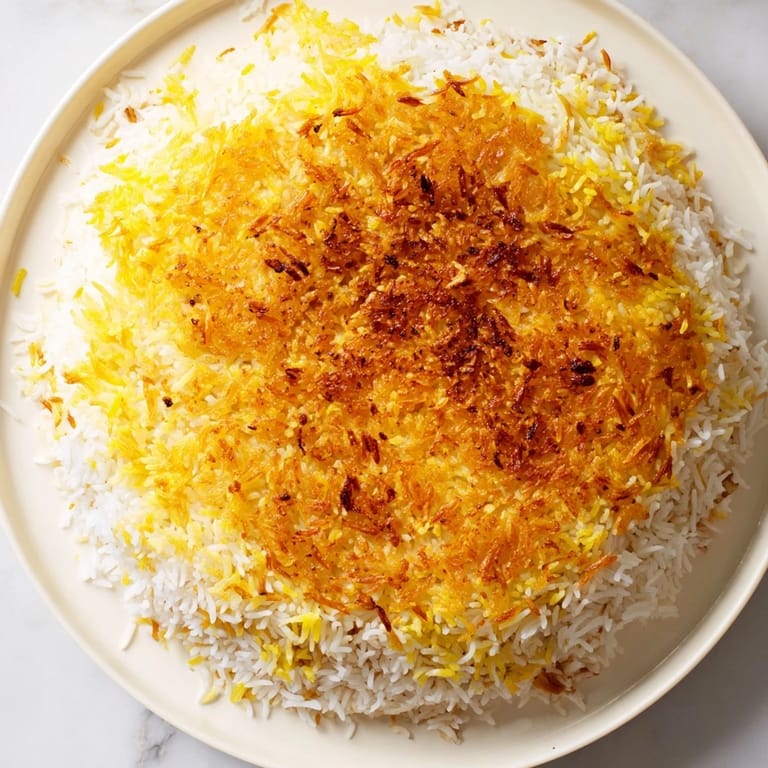
Save Tahdig teaches you something important about cooking: that the parts you can't see until the very end matter just as much as what's happening on top. This rice reminds me that patience and technique, combined with a few choice ingredients, create something that feels almost like an occasion every time you make it.
Recipe FAQ Section
- → What is tahdig in Persian cooking?
Tahdig refers to the golden, crispy crust formed at the bottom of the pot when cooking rice, prized for its texture and rich flavor.
- → How is the crispy tahdig layer achieved?
The tahdig forms by cooking a saffron and yogurt-infused rice mixture at the bottom of a butter and oil-lined pot over low heat, allowing caramelization.
- → Can tahdig be made with other ingredients?
Yes, variations include thinly sliced potatoes or flatbread as the crispy base instead of the yogurt-rice layer.
- → Why soak and parboil the rice before cooking?
Soaking removes excess starch for fluffier grains, while parboiling partially cooks rice, ensuring tender yet firm texture after steaming.
- → What spices enhance the aroma of this dish?
Adding saffron, turmeric, and optionally cinnamon or cardamom pods during cooking enriches the fragrance and flavor profile.
- → Is this dish suitable for gluten-free diets?
Yes, the core ingredients like basmati rice, yogurt, and spices are naturally gluten-free.